Short answer: The Palace on Wheels route runs 7 nights, 8 days, departing Delhi every Wednesday and visiting Jaipur, Sawai Madhopur, Chittorgarh, Udaipur, Jaisalmer, Jodhpur, Bharatpur, and Agra before returning to Delhi. Travel between cities happens overnight, so daytime hours are dedicated entirely to guided sightseeing.
Ask anyone who has boarded the Palace on Wheels what stays with them, and most won't start with the cabins or the cuisine — they'll start with the route itself. Over 7 nights and 8 days, this heritage train carries you through eight destinations that together tell the story of Rajasthan's royal past, from imperial Delhi to the desert forts of the west and finally to the white marble of the Taj Mahal. This guide walks through the complete Palace on Wheels route stop by stop, so you know exactly what to expect at each destination before you book.
Why the Route Matters More Than You'd Think
Unlike a flight-based itinerary where you're shuttled between airports and hotels, the Palace on Wheels route is designed as a continuous, unfolding journey. You sleep on the moving train between most stops, wake up in a new city, spend the day exploring with a guided excursion, and reboard in the evening as the train departs for the next destination overnight. The route was originally modeled on the private carriages of Rajasthan's former princely states, and the destinations chosen reflect exactly where those rulers once held court — Jaipur, Jodhpur, Udaipur, and Jaisalmer among them.
The full circuit begins and ends in New Delhi, with the train departing every Wednesday evening from Safdarjung Railway Station.
The Complete Day-by-Day Route
### Day 1: Delhi — Embarkation
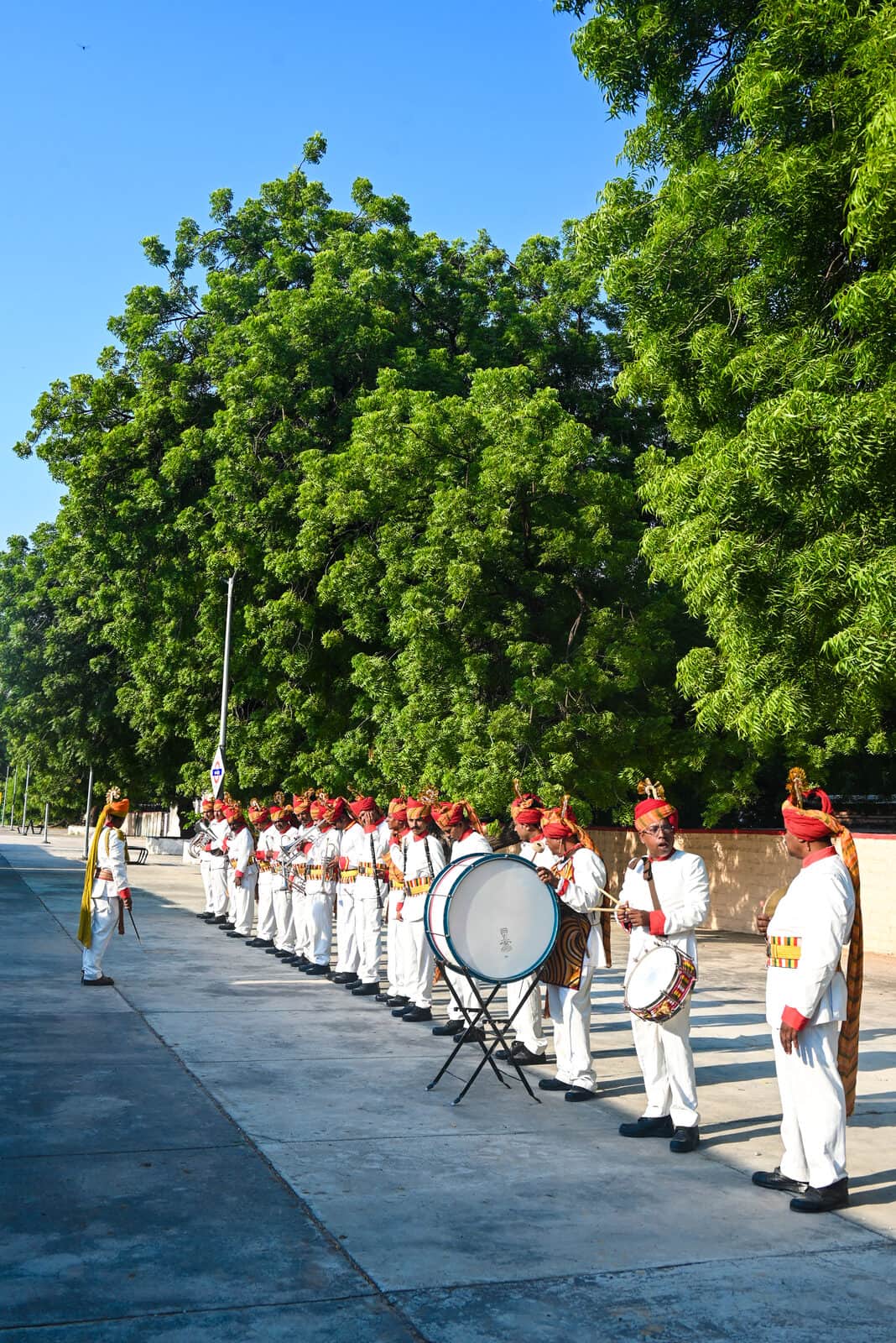
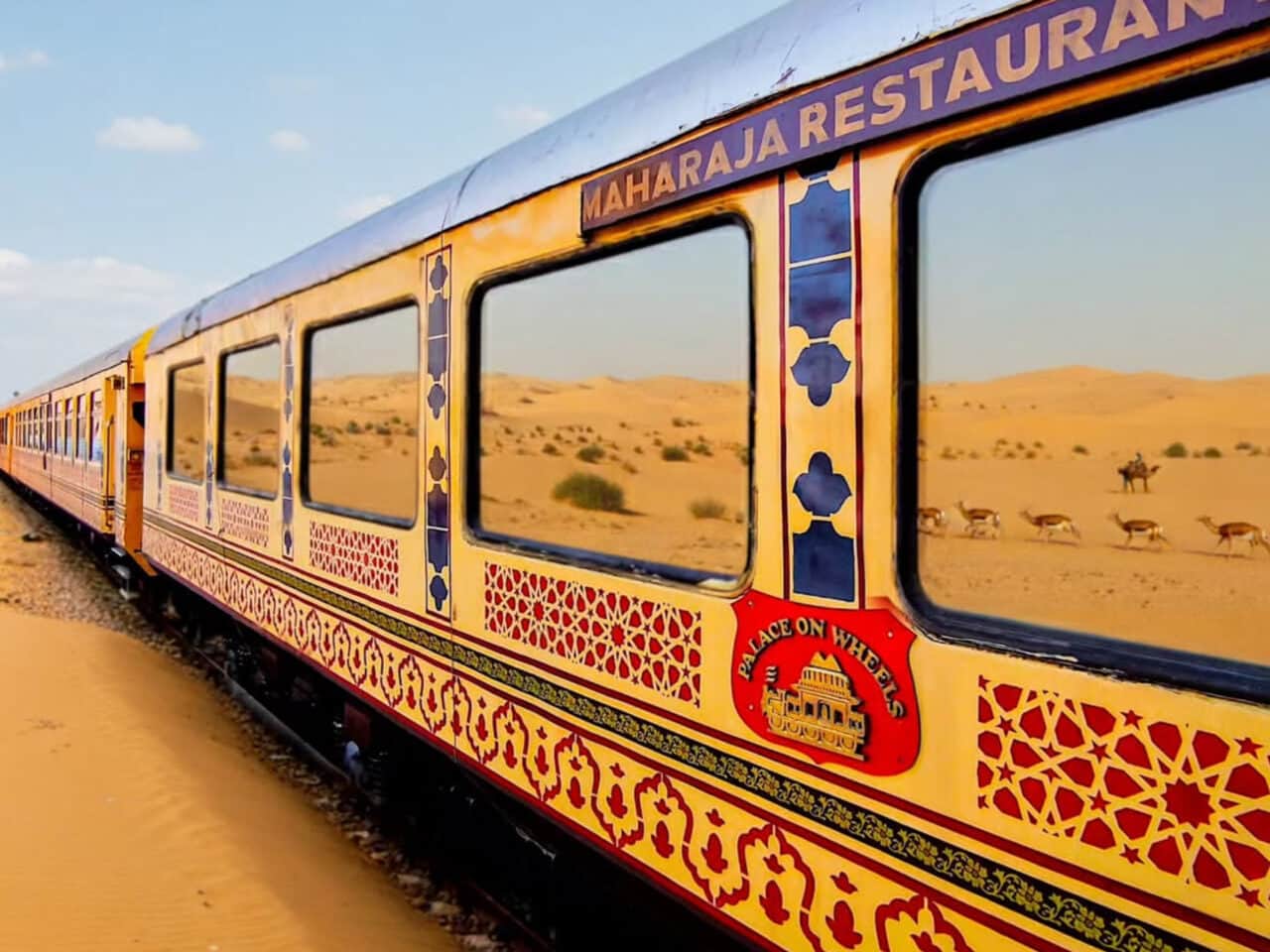
Your Palace on Wheels journey begins in New Delhi, India's capital and the seat of several historic empires. Guests are welcomed at Safdarjung Railway Station with a traditional Rajasthani reception — folk musicians, a garland, and a tilak mark on the forehead — before boarding your assigned cabin. The train departs in the evening, so Day 1 is largely about settling in: exploring your cabin, meeting your travel companions over the welcome dinner in the Maharaja or Maharani restaurant car, and watching Delhi's lights fade as the train pulls out for Jaipur.
### Day 2: Jaipur — The Pink City
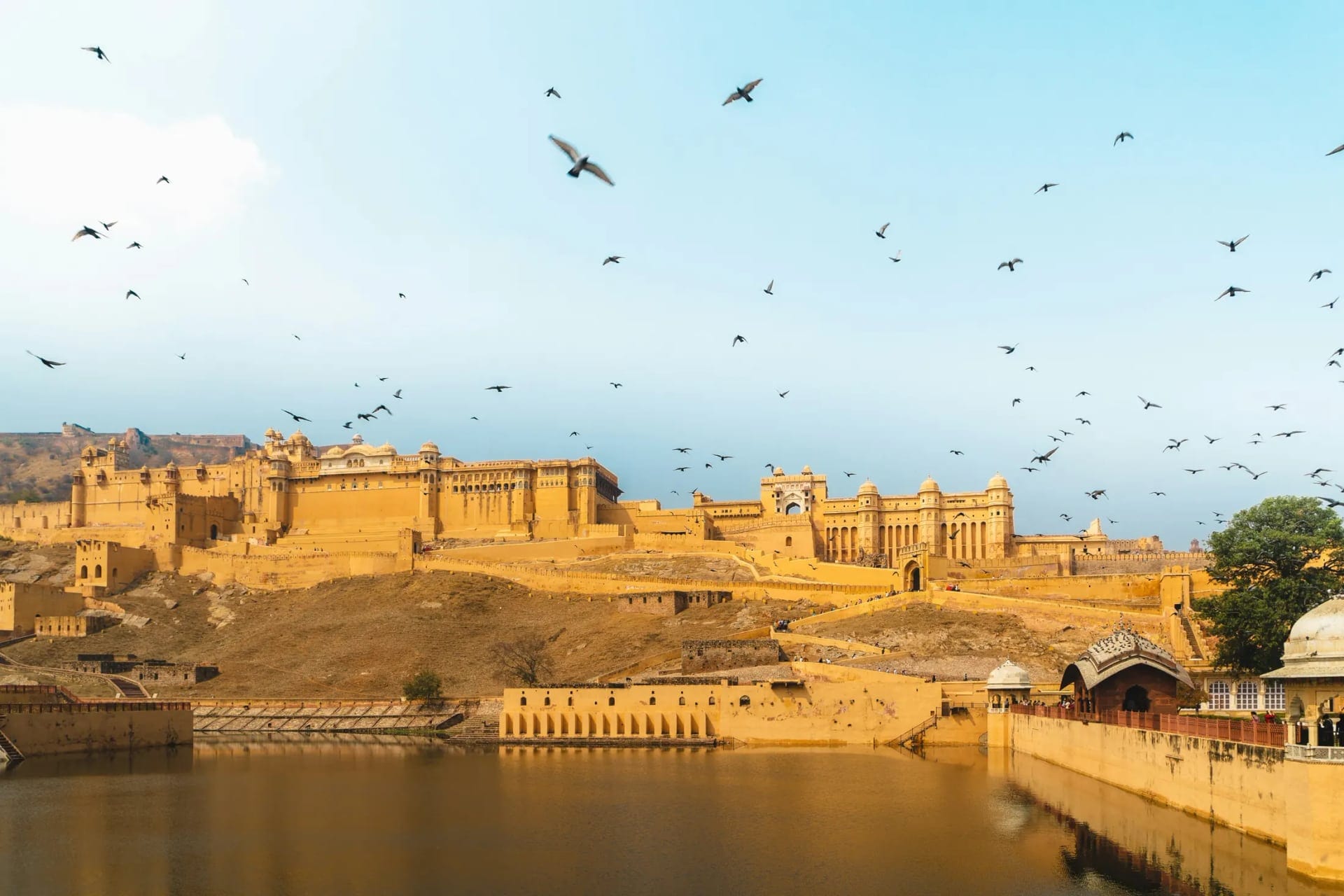
You'll wake up on Day 2 already in Jaipur, the capital of Rajasthan and the first of the state's three "Golden Triangle" cities. Jaipur earns its nickname from the terracotta-pink buildings of its old city, a color scheme adopted in 1876 to welcome the Prince of Wales and preserved ever since. The included excursion typically covers Amber Fort — a hilltop fortress-palace reached by a winding road up the ridge — along with the City Palace complex, still partly home to Jaipur's royal family, and Hawa Mahal, the ornate five-story "Palace of Winds" whose honeycomb facade was built so royal women could observe street life unseen. Jaipur is a full day's exploration, and the train remains in the city into the evening before departing for the next stop.
### Day 3: Sawai Madhopur & Chittorgarh — Tigers and Fortresses
Day 3 is unusual on the Palace on Wheels route because it combines two very different experiences in a single day. The train arrives early at Sawai Madhopur, gateway to Ranthambore National Park — one of India's most celebrated tiger reserves and a former hunting ground of the Jaipur maharajas. Guests head out on an included jeep safari through the park's forests and lake systems; tiger sightings are never guaranteed in any wild reserve, but Ranthambore has one of India's healthier tiger populations, and leopards, sloth bears, and abundant birdlife are common sights even without a tiger appearance.
By afternoon, the train has repositioned to Chittorgarh, home to the largest fort complex in India. Chittorgarh Fort sprawls across a hilltop for nearly 700 acres and was the capital of Mewar for centuries, the site of several legendary sieges and acts of Rajput defiance. The Tower of Victory (Vijay Stambh) and the palace of Rani Padmini, tied to one of Rajasthan's most retold historical legends, are highlights of the excursion here.
### Day 4: Udaipur — The City of Lakes
Udaipur is, for many travelers, the emotional high point of the Palace on Wheels route. Built around a chain of artificial lakes and framed by the Aravalli hills, Udaipur has a softness that contrasts with the desert forts elsewhere on the itinerary. The City Palace, perched above Lake Pichola, is one of the largest palace complexes in Rajasthan, and a boat ride on the lake — passing the Lake Palace hotel that appears to float on the water — is typically part of the day's excursion. Jag Mandir, a garden palace on its own island, is another frequent stop. Many guests find Udaipur is where they'd happily have stayed an extra day.
### Day 5: Jaisalmer — The Golden City
The train crosses deep into the Thar Desert to reach Jaisalmer, and the change in landscape is dramatic — golden sandstone as far as the eye can see, with Jaisalmer Fort rising directly out of the desert floor like a living extension of the ground itself. Unlike most Rajasthani forts, which are now largely museums, Jaisalmer Fort is a living fort, with roughly a quarter of the old city's population still residing within its walls. The excursion typically includes the fort itself along with intricately carved haveli mansions built by wealthy merchant families, and many itineraries include a visit to the Sam Sand Dunes on the city's outskirts for a taste of the open Thar Desert.
### Day 6: Jodhpur — The Blue City
Jodhpur announces itself from a distance — the old city below Mehrangarh Fort is famously painted in shades of blue, originally to mark Brahmin households and now simply part of the city's identity. Mehrangarh itself is one of the best-preserved forts in India, towering 400 feet above the city on a rocky outcrop, with museum galleries showcasing royal palanquins, weaponry, and textiles. From the fort ramparts, the blue city spreads out below in a view that's become one of the most photographed in Rajasthan. Umaid Bhawan Palace, one of the largest private residences in the world and still partly home to Jodhpur's royal family, is often included as well.
### Day 7: Bharatpur & Agra — Nature and the Taj Mahal
Day 7 combines two very different stops in a single day. The morning opens gently at Keoladeo Ghana National Park in Bharatpur, a UNESCO World Heritage wetland famous among birdwatchers worldwide. Historically a royal duck-hunting reserve, Keoladeo is now a protected sanctuary hosting hundreds of bird species, including migratory Siberian cranes and sarus cranes in season — a deliberate change of pace before the day's main event.
By early afternoon, the train has repositioned to Agra for the journey's best-known sight: the Taj Mahal, the white marble mausoleum built by Emperor Shah Jahan for his wife Mumtaz Mahal, and one of the most recognized buildings on Earth. Seeing the marble in the shifting afternoon light is, for most travelers, the reason the journey was booked in the first place. Agra Fort, a UNESCO World Heritage Site in its own right and the Mughal seat of power before the capital moved to Delhi, typically rounds out the visit. Dinner that evening is the most festive of the journey, as the train turns north for the overnight return to Delhi.
### Day 8: Return to Delhi
There are no monuments scheduled on the final day — only a slow breakfast aboard as the train completes its overnight run back into New Delhi, arriving at Safdarjung Railway Station by mid-morning and bringing the 7-night, 8-day journey to a close.
Understanding the Route's Logic
Looking at the route as a whole, there's a clear narrative arc: you begin in the seat of modern Indian government, move into the heart of historic Rajputana with Jaipur, Chittorgarh, and Udaipur, push into the deep desert at Jaisalmer, return through the blue city of Jodhpur, pause for nature at Bharatpur, and close with the single most famous monument in the country. Few single trips manage to combine forts, palaces, wildlife, and one of the Seven Wonders of the World into one continuous week.
Practical Notes on the Route
A few things worth knowing before you book based on this itinerary:
- **The order is fixed.** Departures always follow the same sequence — Delhi, Jaipur, Sawai Madhopur, Chittorgarh, Udaipur, Jaisalmer, Jodhpur, Bharatpur, Agra, Delhi — so you can plan pre- or post-tour extensions around it with confidence.
- **Travel between cities happens overnight.** With the exception of the Sawai Madhopur–Chittorgarh double stop on Day 3, the train moves between destinations while you sleep, maximizing daytime hours for sightseeing.
- **All excursions are guided and included.** English-speaking guides accompany every stop, and monument entry fees are built into your fare — a detail worth checking against other Rajasthan tour options, where entry fees are often billed separately.
- **The full route only runs on the main weekly departure.** Palace on Wheels does not offer shortened versions of this specific route; if you're short on time, you'd need to consider a different luxury train product entirely.
Is This Rajasthan Luxury Train Route Right for You?
The Palace on Wheels route is built for travelers who want to see Rajasthan comprehensively rather than cherry-pick one or two cities. If your priority is a deep, unhurried stay in a single destination — say, ten days based entirely in Udaipur — a different kind of trip may suit you better. But if you want the full sweep of Rajasthan's royal heritage train experience, covering desert, lakes, forts, wildlife, and the Taj Mahal in a single continuous journey, this route was designed with exactly that ambition in mind, and it's a large part of why Palace on Wheels remains India's most celebrated luxury train nearly 45 years after it first departed Safdarjung Station.
For full pricing across every cabin class, see our Price & Tariff guide, and check current departure dates before you plan your travel window.
A Closer Look: What Makes Each Stop Distinct
It's worth going a layer deeper on why these particular eight destinations were chosen, since the selection isn't arbitrary — each stop represents a genuinely different facet of Rajasthan's identity, and together they avoid the trap that some shorter tours fall into, where every city starts to blur into "another fort, another palace."
Jaipur represents planned, urban royal grandeur — a capital city built from scratch in the 18th century by Maharaja Sawai Jai Singh II according to principles of Vastu Shastra and classical town planning, which is part of why its streets follow such a distinctive grid pattern compared to the organic sprawl of older Indian cities. Chittorgarh, by contrast, represents Rajasthan's warrior history at its rawest — a fort that changed hands through siege and sacrifice multiple times over the centuries, and whose ruins are far less restored and far more atmospheric than the polished palaces elsewhere on the route. Udaipur softens the itinerary with water and greenery in a state otherwise dominated by desert, while Jaisalmer pushes to the opposite extreme, putting guests directly into the Thar Desert landscape that most people picture when they imagine Rajasthan. Jodhpur adds a distinct color story with its blue old city, and its fort is widely considered among historians and architects to be one of the finest examples of Rajput military architecture anywhere in India. Bharatpur breaks the pattern entirely with a nature-focused day, which many guests describe as an unexpected highlight precisely because it offers such a different rhythm from the forts and palaces. And Agra, of course, needs no introduction — it simply closes the journey with the one monument almost every traveler to India hopes to see in person.
How the Route Compares to Shorter Rajasthan Itineraries
Many independent travelers attempt to see Rajasthan by road, typically covering three to five cities in a private car over one to two weeks. The Palace on Wheels route compresses a comparable — arguably more comprehensive — itinerary into 7 nights, largely because road transfers between cities, which can eat five or six hours of a travel day, are handled overnight while you sleep. A guest doing this same route independently by road would likely need 10 to 14 days to cover the same eight destinations without exhausting themselves with back-to-back long drives, and would need to separately arrange guides, monument tickets, and hotel bookings at every stop. The train handles all of that as a single, continuous booking.
Frequently Overlooked Details About the Route
A few things international travelers often don't realize until they're mid-trip:
The train itself is part of the itinerary, not just transport between stops. Because most of the actual travel between cities happens overnight, your daytime hours are almost entirely dedicated to sightseeing rather than being lost to transit — a meaningful difference compared to bus or car-based Rajasthan tours where a full day can be consumed just getting from one city to the next.
Excursion pacing varies by stop. Jaipur and Udaipur, being larger cities with more to see, tend to have fuller excursion days than smaller stops like Chittorgarh. If you know in advance you'd prefer more free time at a particular destination versus a fuller guided schedule, it's worth asking about the specific day's structure when you book.
Weather shapes the experience differently at each stop. Jaisalmer and the desert stretch of the route feel dramatically different in December than in March — cooler mornings, clearer skies, and a different quality of desert light in the peak of winter. If photography or a particular kind of atmosphere matters to you, it's worth reading our guide on the best time to travel on Palace on Wheels before choosing your departure date.
Planning Your Own Journey Along This Route
If this route matches the kind of trip you're looking for, the next steps are straightforward: check current departure dates to find a Wednesday that works for your travel window, review cabin classes and pricing to decide what level of comfort suits your trip, and get in touch with our team with any specific questions about the itinerary before booking. Because the route runs on a fixed weekly schedule and popular departures — particularly in the December to February peak window — can sell out six to nine months in advance, travelers with a specific date in mind are generally better served booking earlier rather than later.
Whatever draws you to this particular route — the forts, the desert, the Taj Mahal, or simply the appeal of seeing so much of Rajasthan without repeatedly packing and unpacking — the Palace on Wheels itinerary remains one of the most complete single-trip introductions to royal Rajasthan available anywhere, and it's the same essential route that's carried travelers across this landscape since the train's very first journey in January 1982.
Ready to Book Palace on Wheels?
Contact our expert team for current 2026/2027 availability, pricing in your currency, and personalized booking assistance.
Enquire Now