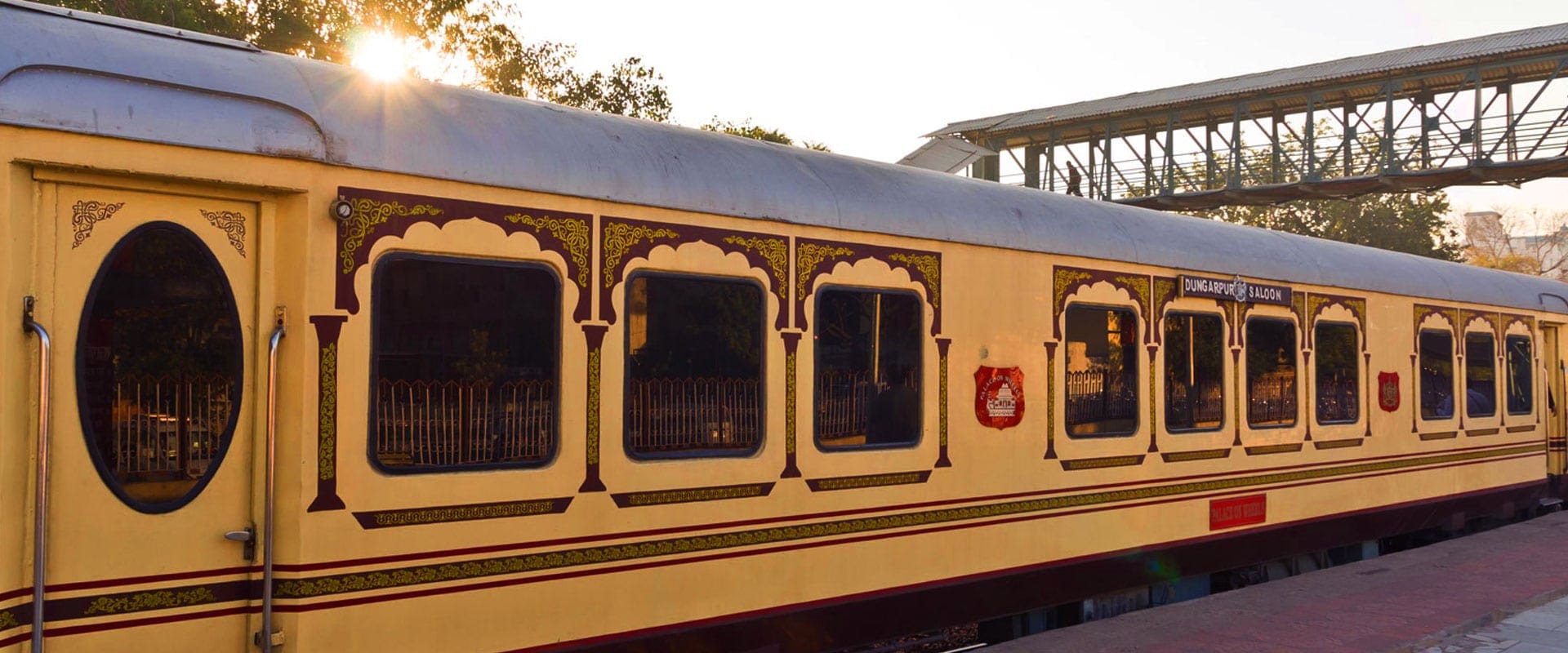
Short answer: Palace on Wheels launched on 26 January 1982, built from the personal railway saloons of Rajasthan's former princely states and jointly operated by RTDC and Indian Railways. It's India's original luxury train — the first to turn royal heritage saloons into a guided, all-inclusive tourist journey.
Nearly 45 years after its first journey, Palace on Wheels remains India's original and most historically significant luxury train — a title it earns not through marketing, but through a genuinely unusual origin story rooted in the twilight of Rajasthan's princely states. This is the full history of how a fleet of royal railway saloons became India's most celebrated tourist train, and why that history still shapes the experience aboard today.
Before the Train: The Age of Princely Saloons
To understand Palace on Wheels, you have to start before 1982, in the era when Rajasthan was not a single state but a patchwork of princely kingdoms — Jaipur, Jodhpur, Udaipur, Bikaner, Jaisalmer, and dozens more, each ruled by its own maharaja. Many of these rulers maintained private railway saloons — personal carriages, often lavishly furnished, used for their own travel across British India's expanding rail network. These weren't generic first-class compartments; they were extensions of royal life itself, decorated and equipped to reflect each ruling family's own taste and status.
When India gained independence in 1947 and the princely states were gradually integrated into the new republic through the 1950s, the political and administrative role of these rulers changed fundamentally. Their personal railway saloons, no longer needed for the purpose they were built, became state property rather than continuing as private royal transport.
1982: An Idea Becomes a Train
Rather than letting these historic saloons sit unused or be scrapped, the Rajasthan Tourism Development Corporation (RTDC), in partnership with Indian Railways, saw an opportunity. Restored and reconfigured into guest accommodations, the former royal saloons could become something entirely new: a tourist train that let travelers experience a version of the royal rail journeys that once belonged exclusively to Rajasthan's ruling families.
Palace on Wheels commenced operations on 26 January 1982 — deliberately timed to coincide with India's Republic Day, itself a symbolically significant date marking the country's transition to a sovereign republic. The train's route was designed to showcase Rajasthan's most significant royal and historical destinations, tracing a circuit that, in its essentials, remains the same route the train runs today: Delhi, Jaipur, Sawai Madhopur, Chittorgarh, Udaipur, Jaisalmer, Jodhpur, Bharatpur, and Agra.
Why the Name and Concept Resonated
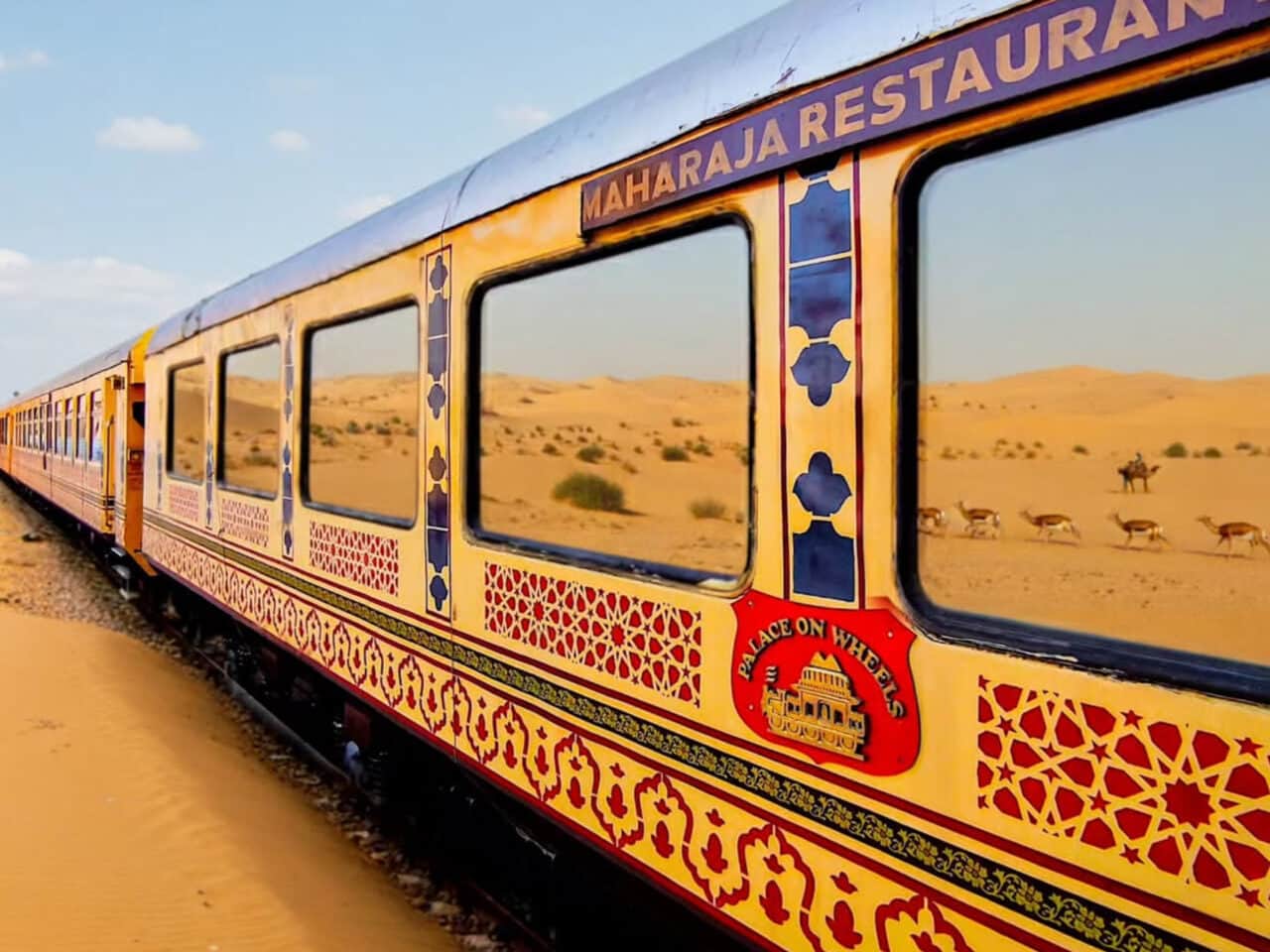
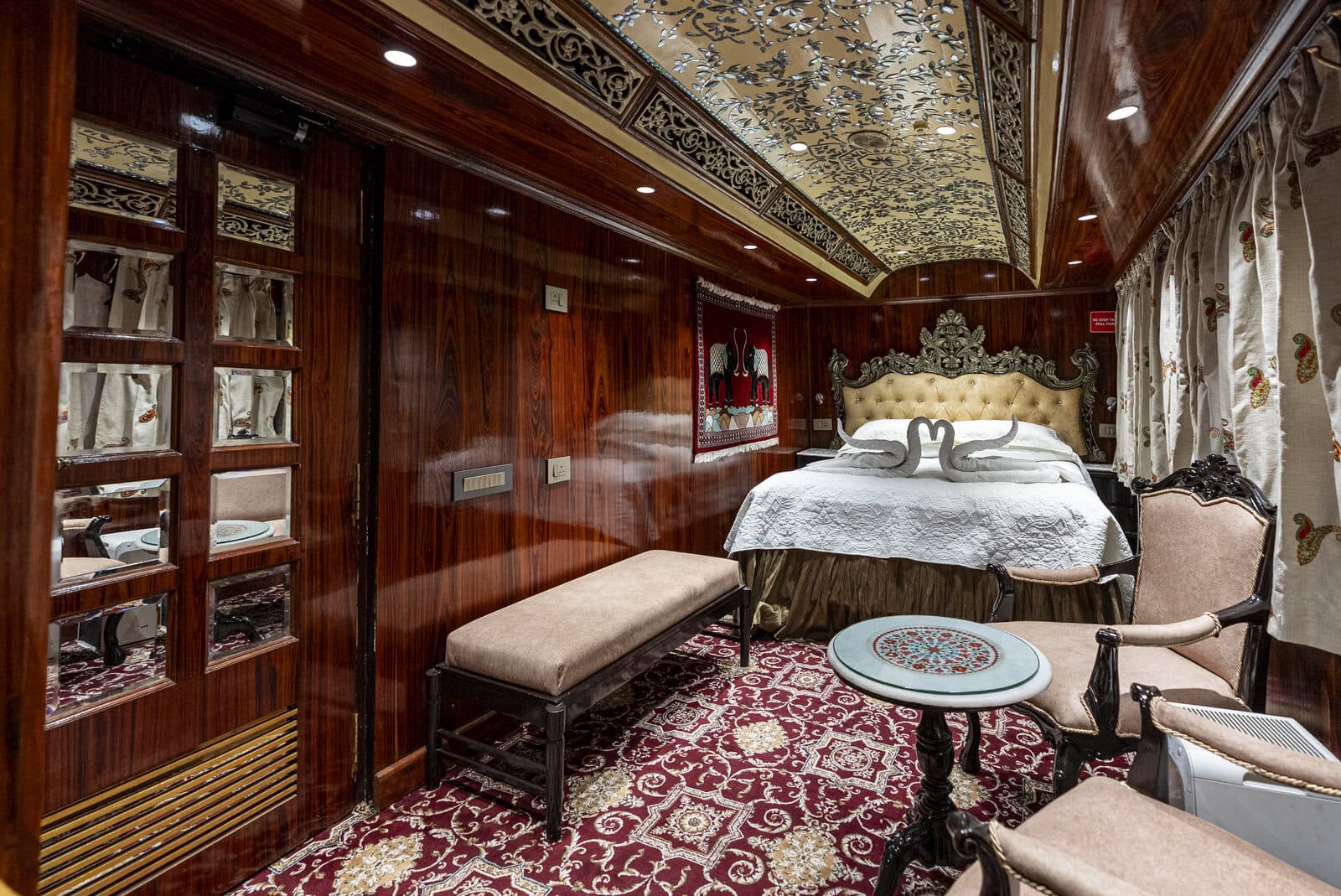
"Palace on Wheels" wasn't just a marketing name — it was a fairly literal description of the concept. Each coach was named after one of the former princely states, and the interior design of each was intended to reflect that state's own artistic and architectural heritage, so that traveling through the train itself became a kind of journey through Rajasthan's royal history, before guests even stepped off at their first destination. This design philosophy — cabins as heritage showcases, not just accommodation — remains central to the train's identity more than four decades later.
Establishing a New Category of Tourism
At the time of its 1982 launch, nothing quite like Palace on Wheels existed in India. The idea of a slow, guided, all-inclusive rail journey through a specific region's heritage sites — rather than point-to-point transportation — was genuinely novel for Indian tourism. The train's early success helped establish luxury rail tourism as a viable category within India, and its influence is visible in every luxury train that followed: Royal Rajasthan on Wheels (launched 2009, explicitly modeled on Palace on Wheels and run by the same RTDC and Indian Railways partnership), the Royal Orient connecting Gujarat and Rajasthan (launched 1994-95), the Deccan Odyssey in Maharashtra, and eventually Maharajas' Express in 2010, positioned as a more contemporary, higher-priced entrant into the category Palace on Wheels had pioneered nearly three decades earlier.
Decades of Recognition
Over more than four decades of operation, Palace on Wheels has accumulated recognition reflecting its status within global luxury travel, including being ranked among the world's leading luxury trains by international travel publications, and holding TripAdvisor Certificates of Excellence across multiple years. That sustained recognition across such a long operating history is itself notable — plenty of tourism products enjoy a strong opening decade before fading; Palace on Wheels has instead remained a benchmark reference point for luxury rail travel in India across a period spanning more than four decades and multiple generations of travelers.
The Train's Continued Evolution
While the core route and heritage concept have remained consistent since 1982, the train itself has continued to be maintained and refreshed over the decades to meet evolving guest expectations — modern amenities like air conditioning, en-suite bathrooms, and contemporary safety and service standards have all been integrated into the original heritage carriages, so that today's guests experience a train that honors its 1982 origins while still delivering a comfortable, current standard of luxury travel. The essential character — carriages named after and designed around Rajasthan's former princely states — has never changed.
Why the History Still Matters Today
For a modern traveler deciding between Palace on Wheels and any of the newer luxury trains that followed it, the 1982 origin story isn't just trivia — it's a meaningful point of difference. Palace on Wheels isn't a luxury train product designed from scratch to compete in a tourism market; it's the train that essentially created that market, built from carriages with genuine royal provenance rather than purpose-built replicas of a royal aesthetic. That distinction between "the original" and "inspired by the original" is one many travelers specifically seek out when choosing this particular journey over its newer competitors.
A Train That Outlasted the World That Created It
There's something worth reflecting on in the fact that Palace on Wheels has now operated for longer than the princely states it commemorates existed as independent political entities in the post-independence era. The maharajas whose personal saloons became this train's founding carriages ruled kingdoms that, by the time Palace on Wheels launched in 1982, had already been part of the Indian republic for over three decades. In a sense, the train has become the primary way most travelers — and many Indians themselves — encounter what that princely era actually looked and felt like, preserved not in a museum but in a form you can still climb aboard and experience firsthand, rolling across the same landscapes those rulers once called home.
Experiencing the History Firsthand
Understanding this history changes how many guests experience the journey itself — the carved wood paneling, the heritage textiles, the coach names drawn from real former kingdoms, aren't simply decorative choices but a direct link to Rajasthan's royal past, physically present in the same carriages that made the very first journey in January 1982. Few travel experiences anywhere in the world offer that kind of continuous, tangible connection between a historic origin and the present-day trip you actually take.
To see the modern journey shaped by this history, explore our complete Route Guide, or learn more About the Train and how it compares to the luxury trains that followed in its footsteps.
Ready to Book Palace on Wheels?
Contact our expert team for current 2026/2027 availability, pricing in your currency, and personalized booking assistance.
Enquire Now